
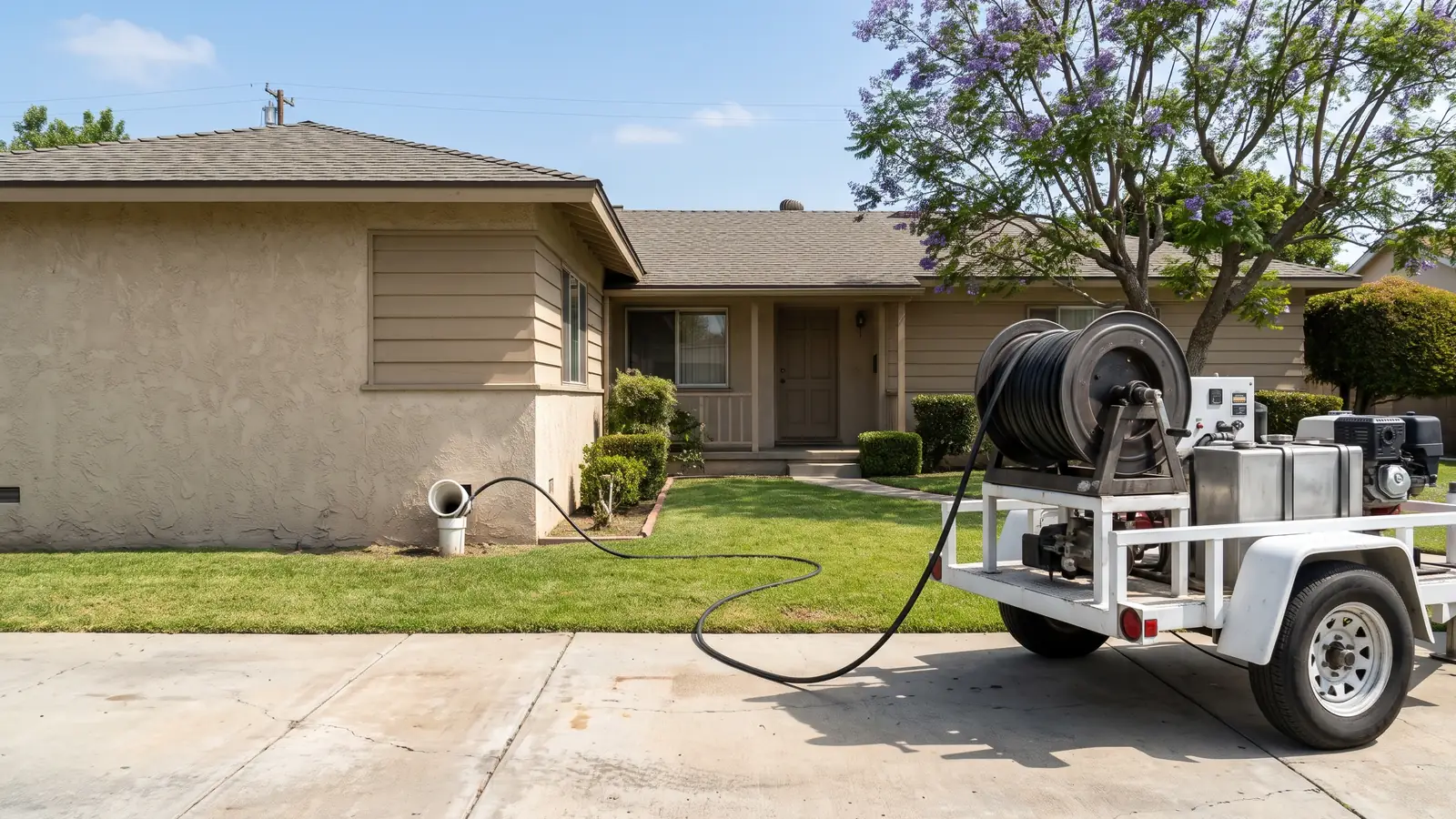
Grease Trap and Interceptor Work in Torrance Kitchens
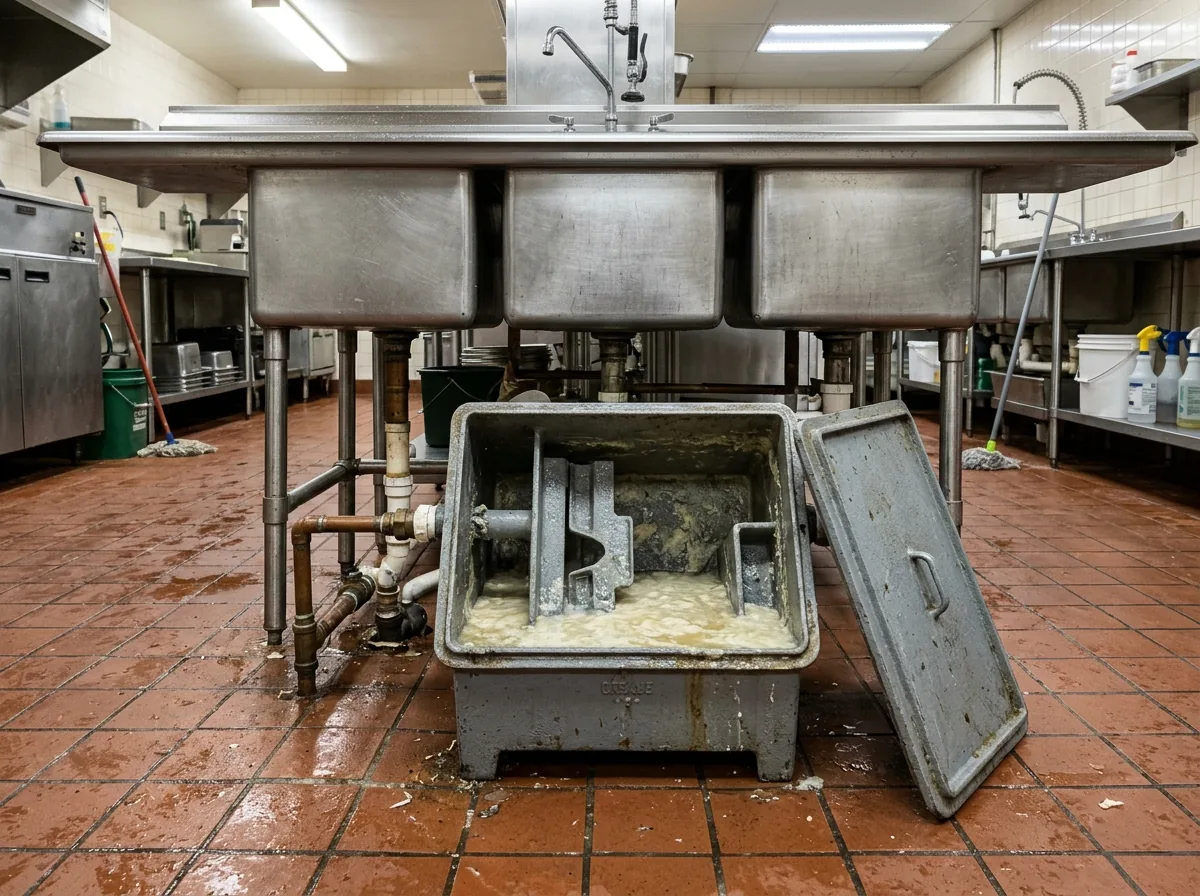
Under-Sink Hydromechanical Grease Traps
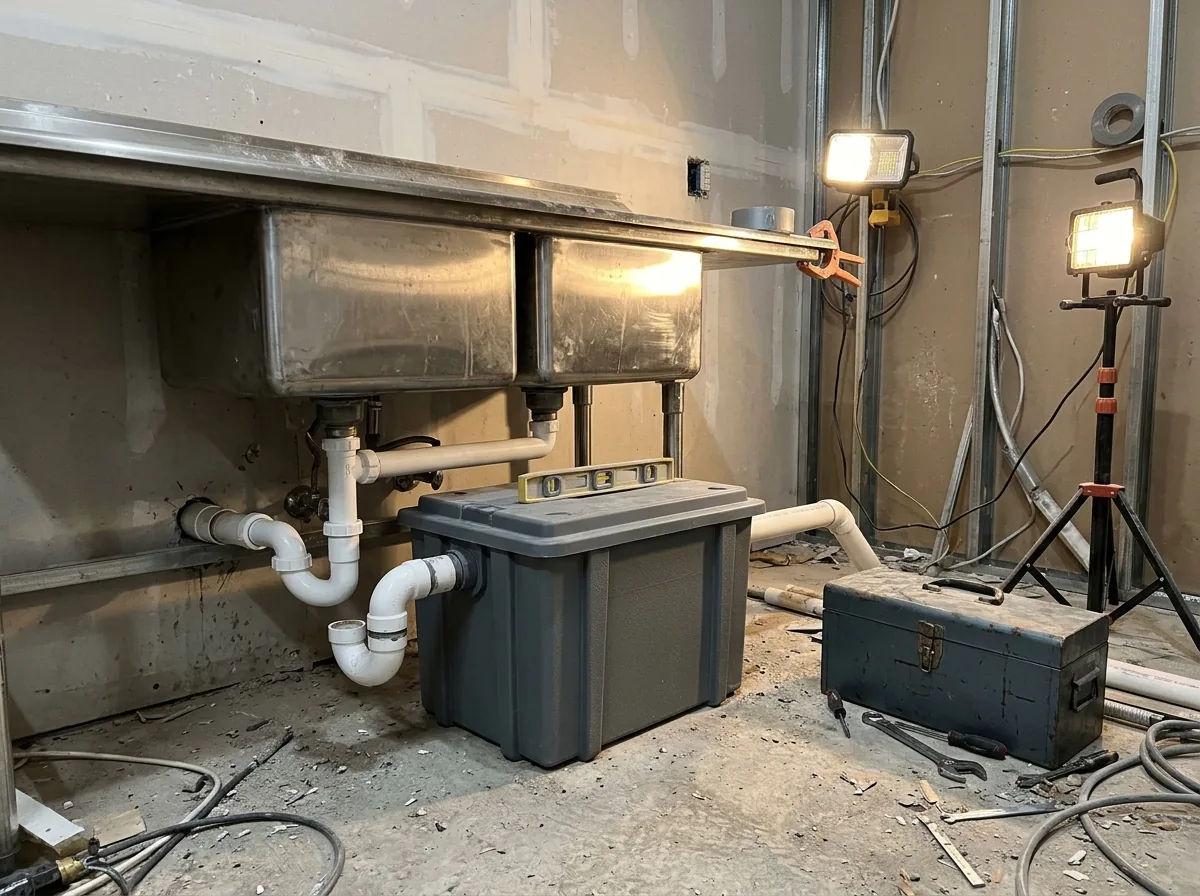
The indoor trap is a small baffled box, usually under a three-compartment sink or beside the dish machine. A county definition puts it at 25 to 75 gallons, single compartment, with a minimum rating of 25 gallons a minute. Because it is small, it fills fast. One hauler notes a 40-gallon trap can fill in a few weeks, which is why these units go on short service cycles.
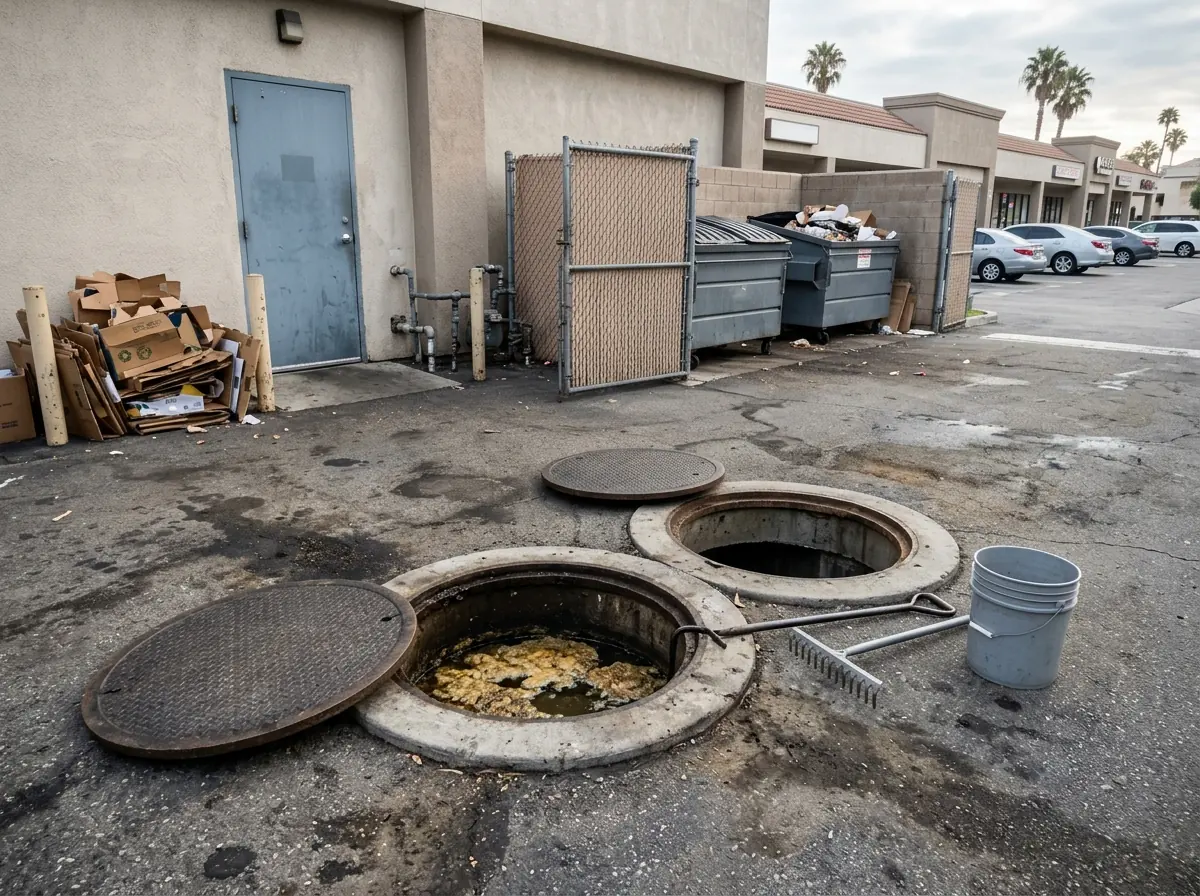
In-Ground Gravity Grease Interceptors
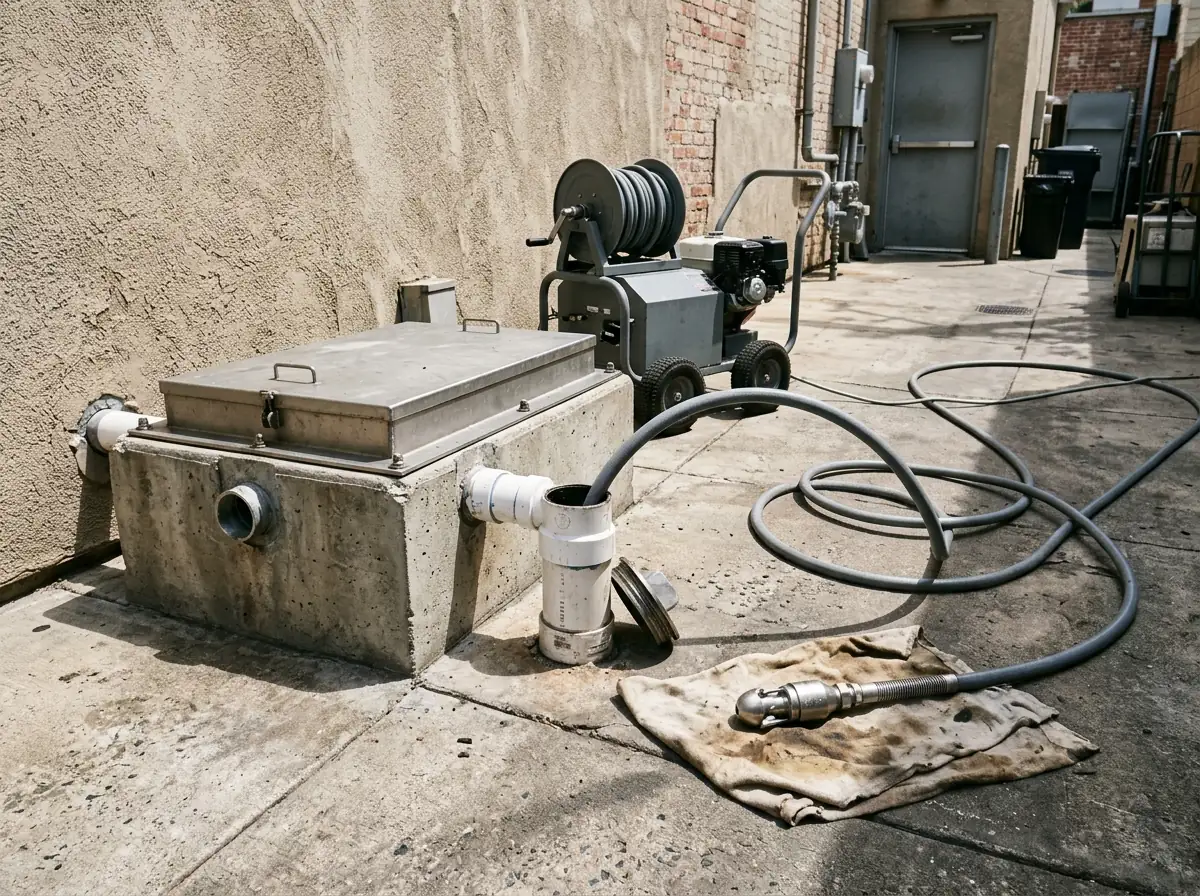
An interceptor is the big version: a precast concrete tank of 750 gallons or more with two or more compartments, buried outside the kitchen. Grease floats, food solids settle and cleaner water leaves through the outlet. A 1,500-gallon unit may go a full quarter between pump-outs, but cleaning one takes a vacuum truck and two open manholes. The hauler guide above puts routine service at $350 to $1,500 a visit, with very large systems at $2,000 or more.
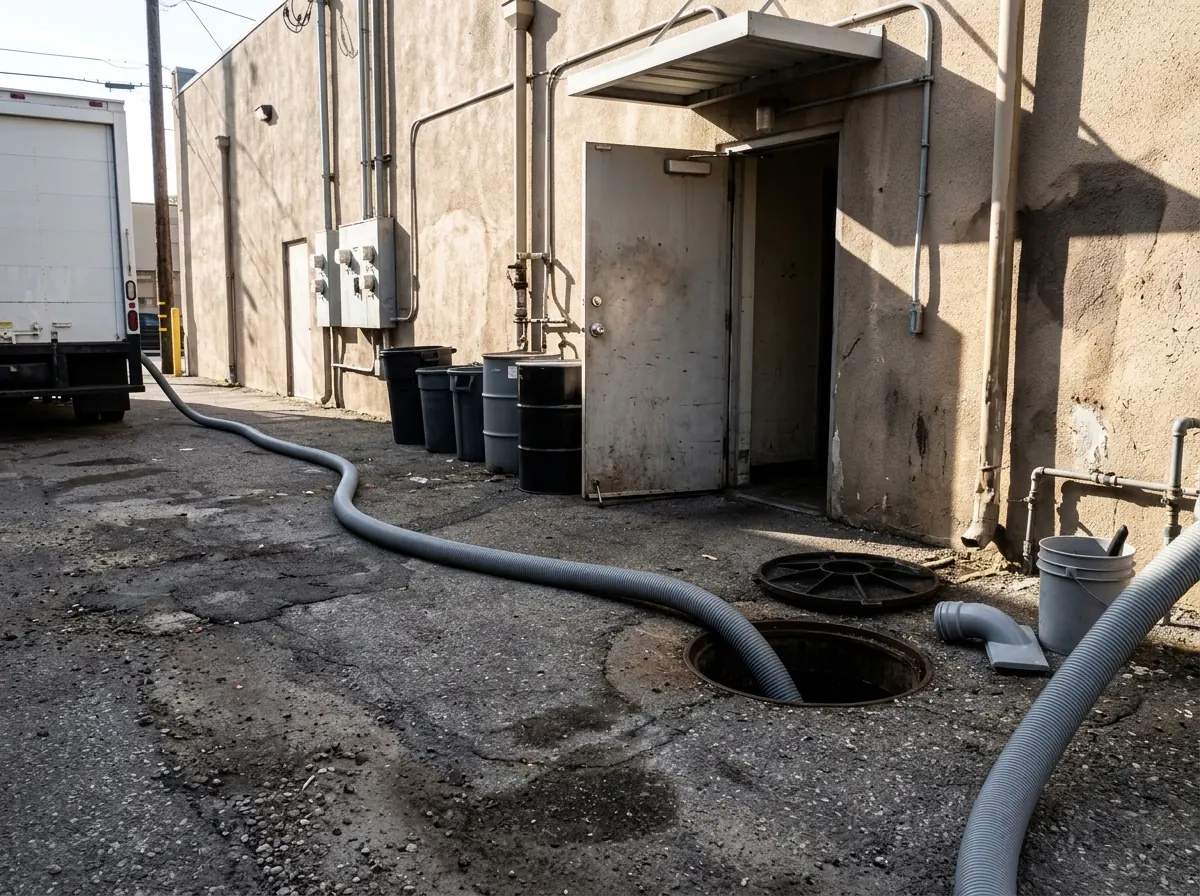
Pumping and Hauling
A proper pump-out empties every compartment, wastewater included, then scrapes the walls, baffles and inlet and outlet tees, because hardened grease clings to concrete. Two shortcuts to watch for: pumping only the grease cap and leaving the sludge, and pouring wastewater back in to cut the hauled volume. The City of Torrance runs no grease disposal site, so the load goes with a hauler registered with the state agriculture department, who should hand over a receipt with the date, unit size and volume removed.
Jetting the Inlet and Outlet Lines
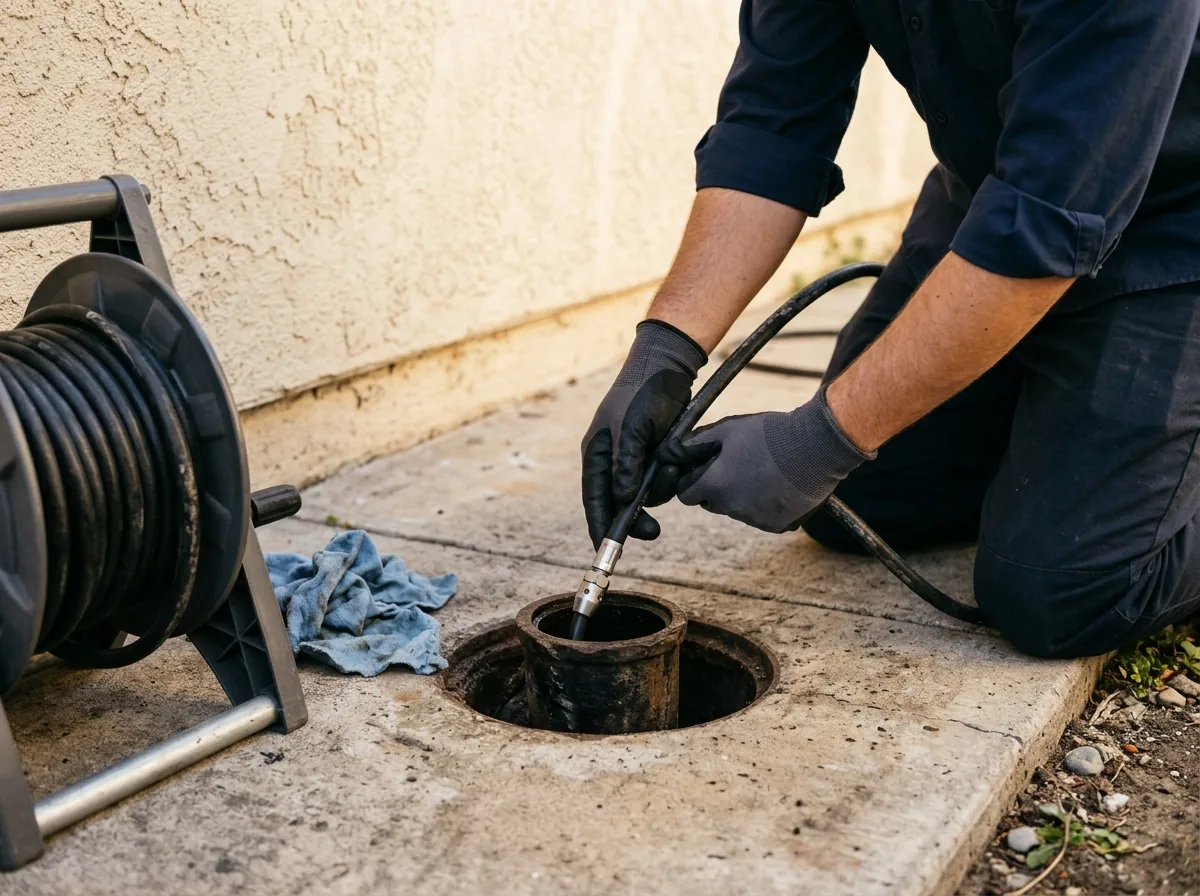
The trap only catches what reaches it. Grease that cools in the line from the sinks clogs the inlet side, and anything that slips past a worn baffle coats the outlet line toward the sewer. Rotating nozzles are the usual pick for grease-heavy commercial lines. While the lids are off, ask the plumber to check the outlet tee: a cracked or missing one lets grease flow straight into the lateral. Kitchens with recurring line clogs should read restaurant drain cleaning too.
Grease Trap Installation and Sizing
Torrance sizes traps by meals served and rates them in pounds of grease. A kitchen serving 100 to 300 meals a day needs a trap rated for 20 pounds of grease for each sink or outlet. Above 300 meals, or with a wash rack, the rating goes to 60 pounds. Devices must be designed to Chapter 10 of the California Plumbing Code and approved by the city, so get the plan checked before a unit goes in. A plumber should also confirm the code edition in force when the permit is pulled.
Why Torrance homeowners and businesses call Torrance Hydro Jet
- One independent plumber gets your request, never a call list
- The referral itself costs you nothing
- Ask for the camera video and a written price before repairs
- Check the plumber's C-36 license on CSLB in a minute
Torrance FOG Rules for Food Service Businesses
Torrance handles grease control itself. LACSD, the regional sanitation agency that treats the city's sewage, exempts restaurants from its industrial wastewater permit, so the local requirements come from Torrance Municipal Code 72.2.17 and the city's sewer plan.
Who is covered
Food service businesses serving 100 or more meals a day.Equipment
A grease trap or interceptor sized by the 20-pound and 60-pound rule above, operated and maintained by the business.Records
For every cleaning: the date, who cleaned it, the volume of grease removed and where it went. Keep them current and on file for three years.Inspections
The Fire Department's Community Risk Reduction Division inspects grease-generating businesses.Schedule
The city's grease rules set no pumping frequency, and the 2025 sewer plan recommends the city adopt a minimum one.
The 25% test you will hear from haulers comes from vendor guidance and other agencies' programs, not from a Torrance document. Use it as a yardstick and treat it as guidance.
What Raises a Grease Trap Service Bill
Size and type
Indoor traps cost least; buried interceptors need a vacuum truck and more time.How overdue it is
Heavy solids and hardened grease add labor, and a first-time or one-off cleaning often costs more than a scheduled one.Access
A trap that is hard to reach, or lids buried under a stack of pallets, adds time on site.Timing
An emergency call during service, or a night appointment, adds charges. Clear the lids before anyone arrives.
Hauler and plumber visits may be booked separately. When you call this line, say whether the problem is a full trap, a slow line or a new install, and that detail reaches the plumber before they phone you back.
See restaurant drain cleaning for jetting the floor sinks and lines that feed the trap.